
Hearing from California’s Coast
A recap of the regional hearings on proposed changes to the State’s Marine Protected Area Network
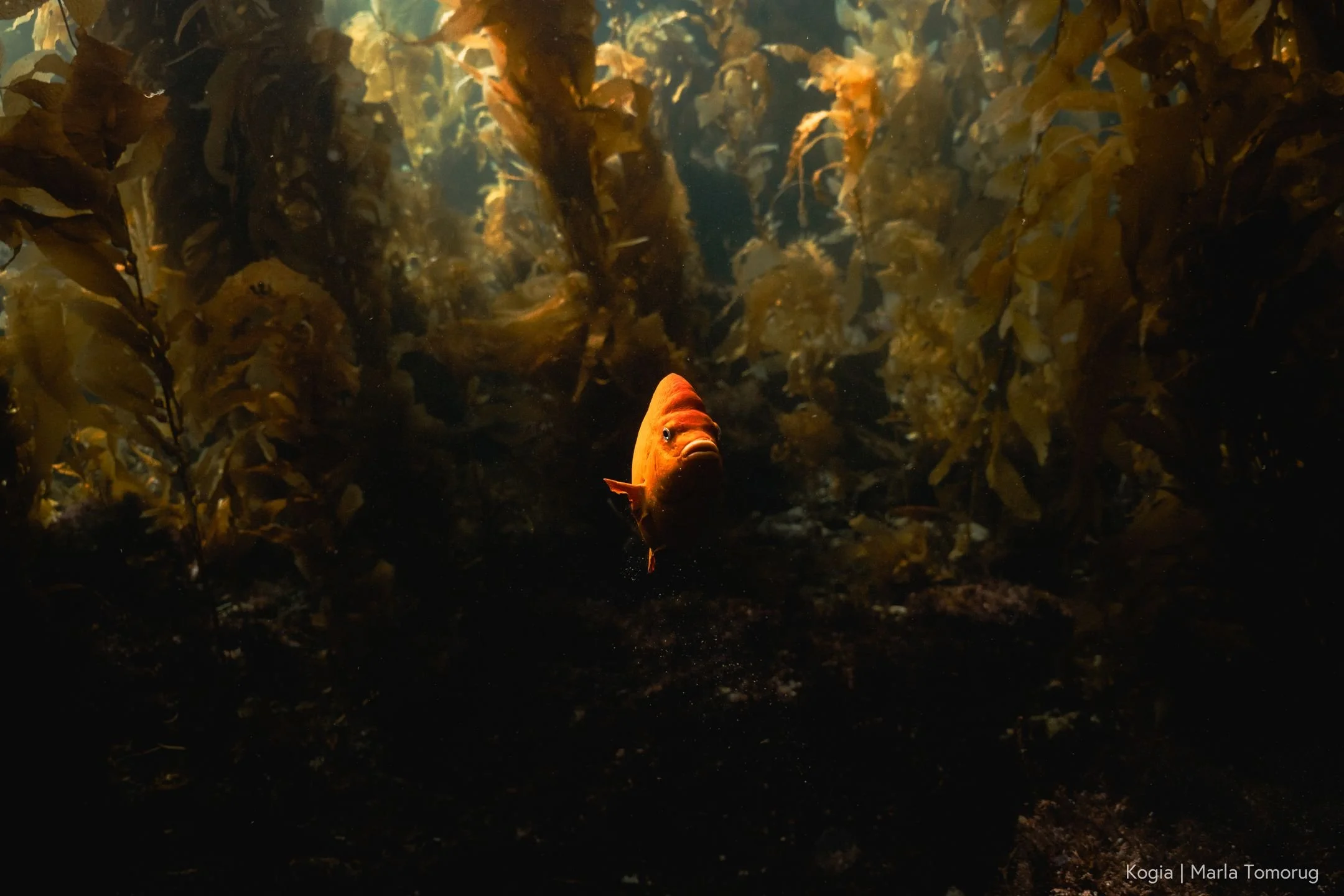
Photo: Kogia | Marla Tomorug
Over four days and nearly 40 hours throughout April and May, Fish On gave 16 public comments on behalf of our community at the regional Marine Protected Area (MPA) petition hearings. The Fish and Game Commission held these meetings at three locations across the state with the intention of bringing opportunities for public input closer to stakeholders.
Background
“Adaptive management” was written into the law that originally established our network of 124 MPAs. This ensures that new science and evolving community needs can continue to inform how we manage MPAs, and also correct for past oversights in policy and participation. In our view, the state should have taken the vast amount of scientific information they collected over the last 10+ years, prioritized communities originally excluded, and then have made a suite of recommendations based on identified gaps and emerging threats to our marine environment. Instead, they put the onus on the public to navigate this information—with no clear scope or guidance—and submit petitions with proposed changes to the MPA Network.
While this led to some science-based petitions that do address noticeable gaps in the network, there are also petitions that aim to weaken the MPA network in favor of commercial activity. The Commission has yet to make their decisions, but after two years since the petitions were originally submitted, this was the first opportunity for the public to actually weigh in on each of the proposals.
Communities in Action
Commissioner Samantha Murray took on the difficult task of maintaining decorum and facilitating each of the hearings. Particularly after hostile and ignorant remarks directed at Tribal communities at two preceding Commission-led meetings, we were incredibly grateful for the commitment and attempt to make these MPA hearings safe spaces for communities to participate. Multiple stakeholder groups shared personal stories, local anecdotes and perspectives on each proposed change to the MPA Network. While there were opposing views, all participants clearly held a shared appreciation for the ocean and all it offers us.
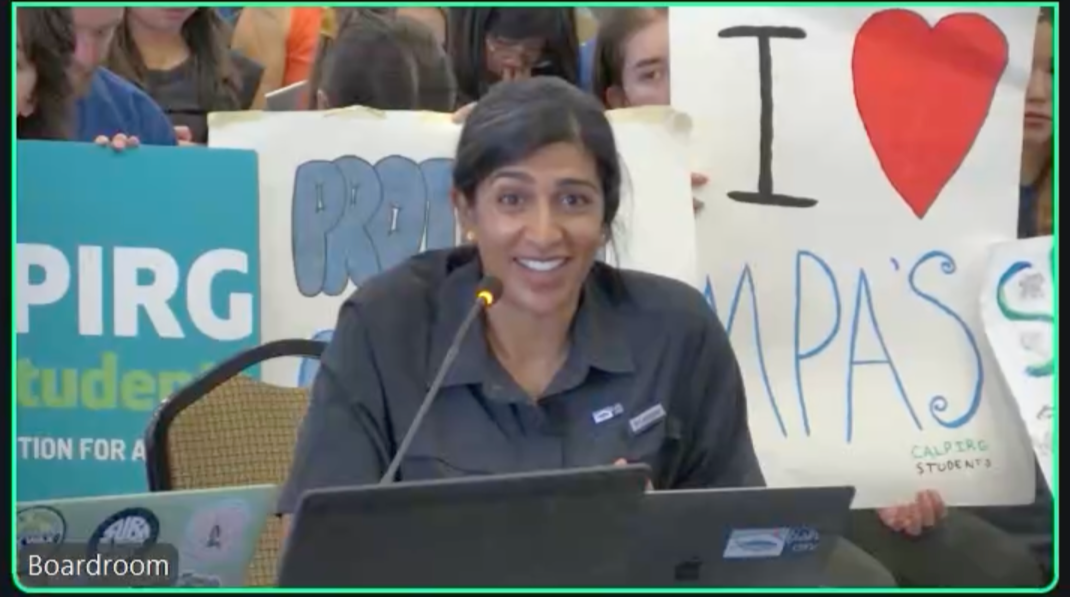
Founder and Executive Director Anupa Asokan giving public comments at the May 19 South Coast hearing.
Fish On was one of few groups to offer nuanced and balanced approaches in response to petitions to change the MPA Network (see a summary of our comments below). This is a critical opportunity to make sure our coast can withstand another heatwave and other imminent threats, and though the process isn’t ideal, we stayed solutions-oriented in our responses to each proposed change.
In addition to Fish On, representatives from multiple environmental advocacy groups, sportfishing businesses, student organizations, and community members spoke at each meeting. While the timing during a work day and the limited outreach by state agencies tend to exclude many communities from these meetings by default, importantly, Tribal and Indigenous community members participated in the regional hearings in spite of the awful commentary at the previous meetings.
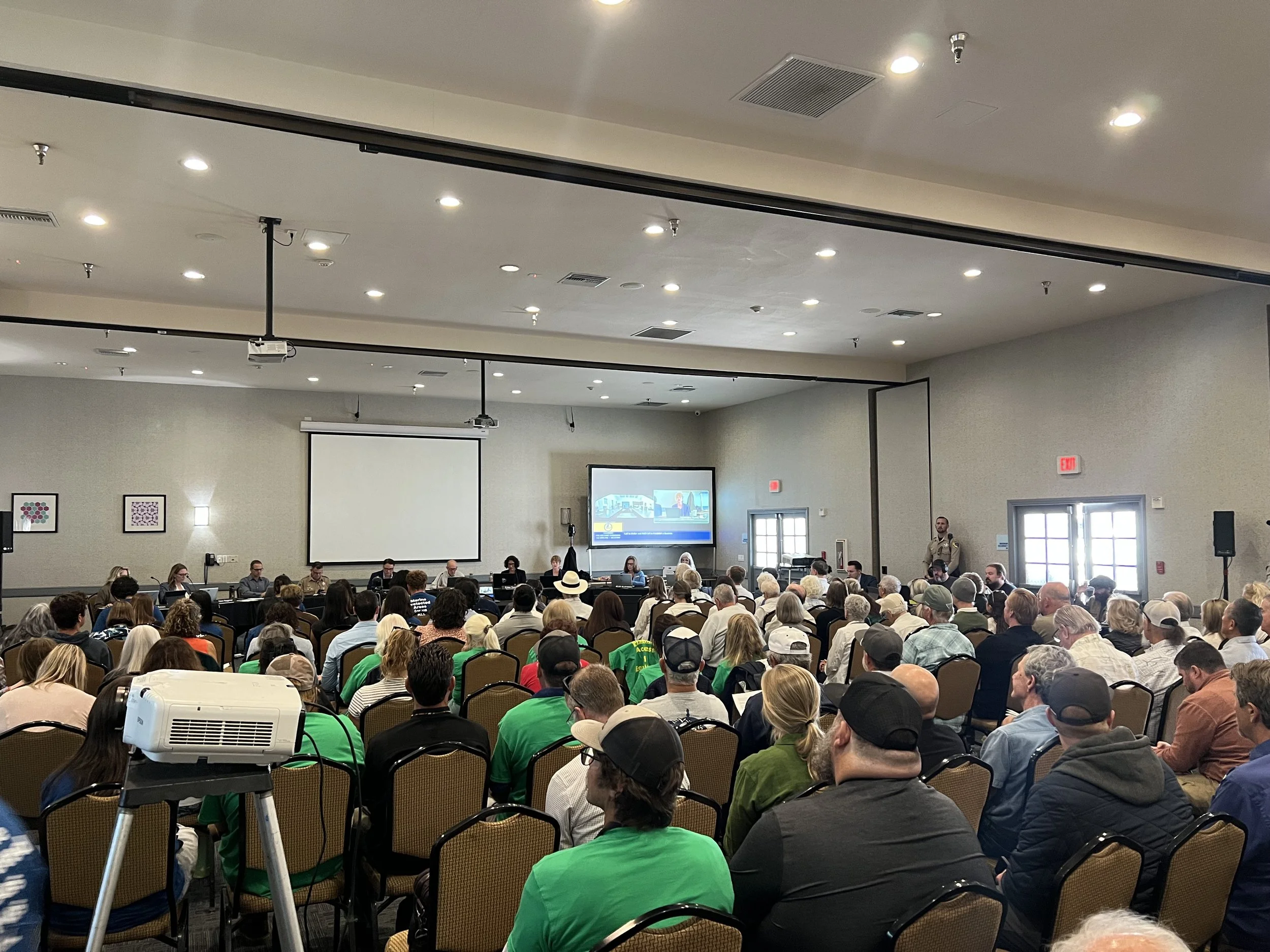
Inside the room at the South Coast regional hearing in San Clemente.
Some Rough Waters
The California Department of Wildlife had previously released their evaluation and recommendations on the proposals that were not Tribally-led. We highlighted significant concerns with the Department’s evaluation, which largely reinforces the status quo by ignoring new science, opportunities to support the climate resilience of California’s coastal ecosystems, and the communities who were left out of the MPA designation process. As a result of our feedback, along with other coastal justice organizations, evaluations of the MPA proposals related to equitable access and the Commission’s Justice, Equity, Diversity and Inclusion policy will finally begin and be completed ahead of the August Commission meeting (see timeline below). The Ocean Protection Council will also release their own evaluation of the MPA proposals, which we hope will consider climate change and the best available science.
While we are hopeful these evaluations will offer opportunities for marginalized and un-/underrepresented communities to finally have a pathway for their perspectives to be recognized by the state, we remain concerned by the Commission and staff’s fundamental misunderstanding of environmental justice and related principles. Several comments from the Commission during this process co-opted and misappropriated concepts that are intended to uplift Indigenous rights and instead suggested that these concepts should be applied to coastal residents in affluent areas. While we recognize that marginalized communities may exist in affluent areas, applying environmental justice principles broadly to an area undermines the opportunity to actually support those who are disadvantaged within it.
Environmental justice and related principles, such as equitable access, are fundamentally about recognizing the communities that have been harmed by past decision-making and ensuring that future actions repair and mitigate the burdens those communities have faced. The mis-use of these terms by state decision-makers and agencies will perpetuate the harm to disadvantaged communities across California and flout state mandates to address these issues, with dangerous ramifications for communities around the world. Particularly when California is regularly lauded as a global policy leader—including for our MPA Network—we must strive to exceed standards and not fail them entirely. Fish On has been a leading voice in coastal and environmental justice since we got started, and we will continue to hold state agencies accountable to the proper implementation of their environmental justice mandates.
Fish On’s Guiding Principles
Equity and Environmental Justice
Many communities, including Tribes, those that fish and others who enjoy the ocean, were not considered when the MPAs were designated. We successfully advocated for environmental justice to be part of the decision-making process this time around, with specific guiding questions in the Department’s evaluation framework. But it was just lip service, as the Department avoided answering these questions altogether. We submitted a letter imploring the Commission to lay a path forward that prioritizes equitable access, builds accountability into decision-making, centers marginalized communities, and uses MPAs as a tool to repair—not reinforce—systemic imbalance. Our positions reflect meaningful pathways within the current petition process to advance equity and environmental justice.
Climate Resilience
Climate change was not explicitly considered in the design of the current MPA Network and—like equity and environmental justice—was supposed to be a key component of the Department’s evaluation of the MPA petitions but was largely ignored. Given that MPAs were shown to be more resilient to the stresses of the last decade, such as the marine heatwave or “blob,” there is a critical need to enhance the Network to protect species and biodiversity through future uncertainties. Particularly with the current new marine heatwave and the pending super El Nino, this is a critical and timely opportunity to make sure our MPAs can act as our insurance policy. Strengthening the MPA Network for climate resilience also supports more equitable use and recreation for future generations of Californians.
Science and Understanding
Climate change has also added uncertainty to the little that we do know about the vast and dynamic ocean. MPAs are a living laboratory that can help us understand how marine ecosystems function, and how they are impacted by climate change. This enhanced knowledge supports better fishery management and can help us continue to adapt the MPA Network to better serve everyone into the future. The Network should also be seen as an opportunity to reconnect California’s Indigenous communities with their native waters, restore Tribal stewardship, and better understand how to incorporate Traditional Ecological Knowledge into MPA management and decision-making. Our positions also reflect the importance of maintaining our existing and long-standing Marine Reserves, while advancing opportunities to help us better understand the ocean and how communities interact with it.
The Coastal Breakdown
The regional meetings gave us an opportunity to respond to amended petitions and region-specific concerns. These discussions led us to offer the following comments and recommendations:
North Coast
-
Fishery management processes are wonky, complicated and difficult to track, and the system excludes people by design. MPAs are a concept that is easy to engage with and frankly a way for marginalized communities and communities of color can take back space—literally in the ocean and in the Commission setting—and reconnect with a healthier ocean. But Commission processes have never been set up to help those communities feel safe, welcome and valued.
We directed Commissioners to review the letter we, along with several other environmental organizations, submitted asking for a justice, equity, diversity and inclusion (JEDI) analysis and equitable access evaluation of the petitions to be outsourced and completed. Not doing so would send a continued and clear signal that the Commission only values one type of stakeholder. We need leadership to step up and make space for the diversity of communities and viewpoints that use and value California’s ocean.
-
Request to modify Pyramid Point State Marine Conservation Area (SMCA) to remove recreational take of surf smelt, and continue current tribal take exemption for Tolowa Dee ni' Nation
We expressed support for this Tribally-led petition.
-
Request to allow commercial take of sea urchins in Double Cone Rock SMCA, Sea Lion Cove SMCA, and Stewart’s Point SMCA
Speaking on behalf of Fish On’s community and over 40 other organizations, we urged the Commission to deny this petition for the following reasons:
It misidentifies the problem. It uses kelp restoration as a justification for commercial use, but purple urchins, the species driving kelp decline, represent less than one percent of commercial landings. Opening SMCAs requested would simply incentivize the harvest of red urchins, which make up 99 percent of landings and are not the primary cause of kelp barrens. Additionally, urchins collected from barrens would not meet the quality standards to be commercially viable.
It provides no supporting evidence about negative impacts on the urchin fishery caused by MPAs nor data on urchin abundance within the MPAs to justify the request.
A commercial fishery is managed to try and sustain a population for future harvest, not to restore an ecosystem. The justification is ecologically counterproductive and we already have better tools, such as Restoration Management Permits, which allow for targeted, scientific removal without compromising the MPA network’s integrity.
This allowance would create enforcement challenges for wardens trying to manage complex gear rules.
The petitioner’s own argument is self-defeating: If populations of urchins in areas outside MPAs are declining, we should not invite that same decline into our protected areas.
*This proposal is a part of the broader Petition 2023-14MPA seeking commercial urchin harvest opportunities within nine MPAs statewide.
-
Request to reclassify Stewarts Point State Marine Reserve (SMR) and Bodega Head SMR to SMCAs and allow commercial take of salmon
California’s commercial salmon fishery is only beginning to recover from a three-year closure, making this a time for caution and recovery, not new fishing pressure in fully protected reserves. The petition lacked evidence showing harm to the industry, misused JEDI principles for commercial interest, introduces unavoidable bycatch concerns, and risks weakening State Marine Reserves that act as integral climate refugia.
-
The original request was to reclassify Duxbury Reef SMCA to an SMR and expand the northern and southern boundaries, however the petitioners presented a modified proposal to expand the SMCA to protect the intertidal zone and allow limited recreational fishing.
There’s value to so many communities in protecting the full extent of Duxbury Reef’s sensitive and biodiverse habitat, and we believe that additional protection for the more sensitive intertidal zone while still allowing some recreational fishing is a practical compromise, and we are grateful to the petitioners for the open dialogue and willingness to seek out these middle-ground solutions.
-
Request to expand the boundaries of Natural Bridges SMR and designate a new SMR off Pleasure Point, in Santa Cruz County
For Natural Bridges, we noted that shore-based use is already restricted, so expanding the reserve to a meaningful size would have little impact on marginalized fishing communities and would enhance nearby recreational fishing over time.
For Pleasure Point, the petitioners took our suggestion to make this site an SMCA and allow limited recreational fishing. The law that established our MPA Network allows us to take risks, and understand what may work or not work for different communities while better protecting our coastal ecology. We see this as an opportunity to balance community needs with the potential to better protect sensitive and threatened habitat. This could be a new model for MPAs to act as recreational parks in urban areas. Particularly in the face of a record heat wave and pending El Niño, we view this as a way to balance community needs with better protection for sensitive and threatened habitat.
**This proposal is a part of the broader Petition 2023-33MPA_AM1 seeking to expand six MPAs statewide.
-
Request to reclassify Pacific Grove Marine Gardens SMCA, Edward F. Ricketts SMCA, and Carmel Bay SMCA as SMRs; designate one new SMR in Monterey County at Tanker’s Reef; and make various changes related to kelp restoration in the three reclassified SMRs, Point Lobos SMR, and the new SMR
This proposal offers stronger science and methodology for kelp restoration than the rationale for commercial urchin allowances in Petition 2023-14MPA. Piers and jetties are essential for subsistence fishing communities. While we could support enhancing protections to directly benefit pier and jetty fishing, we can’t support enhancing the protection at Ricketts without a continued exception for hook and line fishing on the north side of the breakwater. We are wary of proposals for artificial enhancements in the marine environment. With rare exception, we would prefer to see more meaningful, alternate conservation pathways and marine protections over artificial reefs.
Central Coast
-
Request to designate a new state marine conservation area (SMCA) near Point Sal that allows recreational take of finfish by hook and line from shore, and to consult with tribes to identify a tribal name for the SMCA.
Fish On expressed our strong support for the Northern Chumash Tribal Council’s proposal for a new SMCA and opportunity to advance Tribal co-management. Our support reflected many of the ecological reasons cited in the petition and by other community members, particularly the importance of this area as a larval retention zone. We believe MPAs are a tool to naturally restore and recover important areas of the ocean, and that restoration must include renewed connection with the original stewards of the land and water. We are also supportive of areas that enhance a land-sea connection particularly with the adjacent land area already being protected. Given that National Marine Sanctuaries have little authority to protect wildlife, we appreciate this opportunity for true biodiversity protection within the Chumash Heritage National Marine Sanctuary.
-
Request to designate a new MPA near Carpinteria as “Mishopshno SMCA” that allows recreational take of finfish by hook and line from shore, and includes a Tribal take exemption for the Santa Ynez Band of Chumash Indians.
The original south coast MPA designation process, which included this site, did not include Tribes. It was well documented that many communities were left out, intimidated, or much worse, and therefore these perspectives were not heard or considered in the original designation process. Many stakeholders with commercial interests referenced past deals that were made to exclude Carpinteria Reef from protection. However, any reliance on past bargaining, which was never formally documented, continues the past injustices and exclusionary practices while also undermining the opportunity for younger and future generations to participate in adaptive management now and going forward.
Fish On supports the proposal for a new Tribally co-managed Mishopshno SMCA. This is an amazing opportunity to honor the historical significance of this area to the Chumash people, allow the Tribal community to return to and reconnect with traditional practices and to integrate these stewardship ideals and ways of knowing into our resource management structure. We also would support extension of Tribal exemptions to all Tribal communities.This also fills the largest gap in the MPA network, giving many communities in the region the opportunity to actually get to and experience the safety and benefits of our underwater state parks. And by protecting this small but ecologically significant and dynamic area, we see a clear opportunity for enhanced shore-fishing, supporting one of the most under-represented communities in fishery management within the broader fishing community. There are multiple reefs in the offshore area that are frequented by boat-based communities that will remain open, one quarter of the near-shore reef will be outside of the SMCA boundary and likely enhanced for all other fishing activity. We see this as a great opportunity to shift the flow of ocean benefits to communities that have been left out, while also minimizing the perceived negative, short term impact, by the subset of the fishing community whose needs are often prioritized by Commission decisions.
-
Request to designate a new MPA near Morro Bay as “Chitqawi SMCA” with a Tribal take exemption for the Santa Ynez Band of Chumash Indians.
Because we stand for environmental justice for California’s Tribal communities, Fish On supports the proposal for the new Tribally co-managed Chitqawi SMCA. We also see value in the model of what could be the ocean equivalent of a wildlife corridor on land, but with protection from land to sea with an existing adjacent state park, ecological reserve, state marine reserve and state marine recreational management area. This proposal would then add coastal and offshore protections. Our request is for the state to formally consult with the petitioning Tribe to allow general recreational fishing from the seaward side of the jetty. Piers and jetties are where most subsistence fishing is concentrated across the state. We believe this allowance will avoid enforcement challenges on the jetty and support lower income communities who may rely on this site, while maintaining the higher level of protection the Tribe has indicated they want to see happen by still limiting activity in the rest of the proposed MPA.
-
Request to expand a boundary at Point Conception SMR.
Fish On did not take an official position on this particular site, but used this comment opportunity to raise a few points for the Commission to consider on this and other actions within this broader proposal. Many communities, particularly those that had more conservation-minded ideals were often subject to harassment and intimidation and their perspectives were missing from the original designation process.
In response to misinformation that the petitioners claimed that fishing is driving kelp loss, we affirmed that this is not true and called on fellow fishers to recognize the impact we can have on an ecosystem. With changing conditions and the lack of inclusion of many communities in fishery management, MPAs are an important tool to limit our impact in key areas in order to help ecosystems recover and adapt. Science does support this concept, and rather than debating than debating the intentions of the petition, we should use these hearings to learn what future people really want for our ocean—particularly with devastating events like a marine heatwave on top of a pending El Niño—and then make a science-based and values-driven decision to get us there and through those pending stresses.
In response to one commenter noting that the shore access to this area is within a private community, Fish On reminded that Commission that Assembly Bill 1680, passed in 2019, and mandates that state agencies develop and implement a comprehensive coastal access plan to open up the 8.5 miles of publicly owned shoreline at the private, gated ranch. One of the petitioning organizations, Azul, was even a co-sponsor on that bill.**This proposal is a part of the broader Petition 2023-33MPA_AM1 seeking to expand six MPAs statewide.
-
Request to modify Anacapa Island SMCA or Anacapa Island Special Closure to protect eelgrass meadows by limiting use of lobster traps in part or all of the SMCA.
Eelgrass loss is a lesser-known but incredibly significant decline in a critical habitat type. Eelgrass meadows are a carbon sink and support the early stage life cycle of many species we enjoy seeing and catching throughout kelp forests. This petition presents a clear problem and solution with site-specific research done by leading scientists on the topic. Eelgrass is able to recover in the ten months out of the year that lobster traps are limited at this site but is quickly lost in the two months when this fishery operates here. We urged the Commission to protect one of the few remaining eelgrass meadows by disallowing hard-bottom gear and anchoring year round.
-
Request to allow commercial take of sea urchins in Naples SMCA and Anacapa Island SMCA
Fish On reiterated our opposition to this petition based on the lack of supporting evidence to show these MPAs cause significant harm to the fishery or data to show the potential benefit that come from opening a small percentage of state waters to commercial harvest. In response to petitioners arguing this allowance is needed because consumer demand is increasing for uni, we noted that fishery limits will still be set through fishery management despite demand.
*This proposal is a part of the broader Petition 2023-14MPA seeking commercial urchin harvest opportunities within nine MPAs statewide.
-
Request to change the classification of Footprint SMR, Santa Barbara Island SMR, and Gull Island SMR to SMCAs to allow take of pelagic finfish species through one of several options.
While we support science-backed opportunities to enhance recreational fishing, the justification here is based on policy gaps rather than scientific insight. The broader benefits of maintaining these Reserves—which were originally proposed from within the fishing community itself—to ecological health, scientific study, enhanced fishery management and global MPA best practices outweigh the limited potential benefits of weakening these areas.
The petition lacks supporting data to show that these closed areas have had a significant negative economic impact on the fisheries referenced. There is also no guarantee that all fishing methods proposed within these areas can be selective to only pelagic species; impacts to other species and bycatch are unavoidable. In fact, there’s new science from around the world showing evolutionary responses of pelagic species to protected areas and it would be a shame to miss the opportunity to see if that’s a benefit here.
For many anglers and spearfishers, Marine Reserves are an opportunity to experience healthier marine ecosystems and understand what our ocean may have looked like historically; we see value in letting species thrive within them and asked the Commission to maintain these Reserves, which are among the state’s largest and most effective protected areas.
South Coast
-
Request to shift the nearshore boundary between the Laguna Beach State Marine Conservation Area (SMCA) (No Take) and the Dana Point SMCA south to the Laguna Beach city limit, thereby increasing the nearshore area within the no-take SMCA.
We offered our support for this proposed boundary change to enhance protection of the nearshore habitat from commercial activity, but we asked the Commission to consider allowing shore-based catch-and-release fishing in the no-take SMCA with a gear restriction of barbless hooks. The law that established the MPA network allows for trying things, experimenting, potentially failing but modifying with adaptive management. A catch-and-release area—where there is strong community support for protection—would be a helpful opportunity to understand the feasibility of enforcing catch-and-release and also the true ecological impact of this type of fishing. This could inform adaptive management going forward, with more potential opportunities for catch-and-release protected areas. We see this approach as a compromise, balancing community-led protection and recreational opportunity.
-
Request to allow the commercial take of sea urchin in Point Dume SMCA, Point Vicente SMCA (No Take), and Swami’s SMCA.
We’ve addressed our rationale for opposing this petition, so rather than repeat our reasoning, we used this comment as an opportunity to call out the stark double standard in expectations of stakeholder outreach depending on who is making a proposal. Commissioners and agency staff have repeatedly insisted that groups petitioning to protect areas must perform extensive stakeholder outreach, yet that expectation is not applied to commercial fishing interests proposing to weaken conservation.
The ocean belongs to everyone. And the default framework for decision-making cannot simply be that one user group deserves to profit from an area, and any other user group—particularly those in favor of conservation action, whether related to MPAs or fishery issues—are often seen as not having a legitimate interest in the future of the ocean.
If this Commission expects rigorous outreach, transparency, scientific justification and broad public engagement when protections are proposed, then the same standard should apply when protections are being rolled back. Consistency matters. Equity matters. And public trust in this process depends on both.
*This proposal is a part of the broader Petition 2023-14MPA seeking commercial urchin harvest opportunities within nine MPAs statewide.
-
Request to expand the western boundary of Point Dume SMCA and change the take allowances to allow recreational take from shore by hook and line and spearfishing; and expand the boundaries of Cabrillo SMR westward and northward.
The petitioners took our suggested modifications at both Pt. Dume and Pt. Loma/Cabrillo SMR, which we believe will enhance local and/or nearby fishing opportunities, especially for shore-based anglers.
At Pt. Dume, the expansion coupled with the shore fishing allowance is a compromise that seems worthwhile to us. Especially given that Los Angeles is the largest urban area in the state and the barriers to even visiting an MPA—limited parking, hostile behavior, long hikes and staircases, land subsidence closing roads, etc.—we see this as a needed opportunity to enhance equitable access to our state’s underwater parks.
At Pt. Loma, where the Cabrillo SMR is located, the northern boundary was adjusted based on our feedback. By putting a popular shore-fishing area just outside the SMR, we believe it will enhance fishing for these communities, and potentially at nearby pier access points. The expansion would help this site be more aligned with scientific guidelines on effective sizing of MPAs. And given that the nearby MPA at Imperial Beach is closed due to toxic runoff and sewage, this expansion will enhance equitable access to the ocean and protected areas for all ocean-going communities.
**This proposal is a part of the broader Petition 2023-33MPA_AM1 seeking to expand six MPAs statewide.
Timeline and Upcoming Opportunities to Participate in MPA decision-making
June 17-18, 2026
Fish and Game Commission Meeting
No MPA Discussion
August 11, 2026
Tribal Committee Meeting
Potential for Tribal community to address questions on their Tribally-led petitions.
August 12-13, 2026
Fish and Game Commission Meeting
Ahead of this meeting, evaluations and recommendations from the Ocean Protection Council, evaluations of the Tribal petitions from California Department of Fish and Wildlife, and a Justice, Equity, Diversity, and Inclusion analysis will be released to the public and given to the Commission.
Based on the discussion between the Commissioners at the final regional meeting, there is a possibility for public comment on these materials, but potentially with limited time allotted to this topic on the meeting agenda.
October 14-15, 2026
Fish and Game Commission Meeting
Projected vote on MPA petitions by the Commission. Proposals will be denied and some actions may move forward through a three-meeting decision process to follow.
The Commission indicated this may be the last opportunity to share public comments on the proposals.
Stand up for a healthier, more resilient coast
If our statements resonate with you, add your name below to help show support for a science-based, community-informed approach to updating California's Marine Protected Areas.
